Showing posts with label Pesto. Show all posts

Sunday, July 10, 2016

Cilantro Mint Pesto


Ah, the laziness of summer. We can just wander out to the garden, gather a few fresh and abundant herbs, boil some water, push some buttons, and make a fabulously savory and satisfying dish. Really, that’s barely an exaggeration when this perky pesto made from the cilantro and mint I have growing in the back yard is involved.

This pesto is from a recipe I used to make ages ago that I got from CookingLight Magazine. That publication provided most of my lesson plans back then as I was teaching myself to cook. The ingredients and dishes are interesting, and the recipes are well-written, and I used to follow them exactly. This pesto was part of a recipe with penne pasta, chicken, and cherry tomatoes, and when I recorded it as a good one, I recorded that whole dish.


I hadn’t made this pesto in forever, though not for any reason I can possibly fathom. I’ve had an unreasonably huge patch of mint for years, and cilantro is easy to come by, especially right now in my garden. No excuses this year. And after being reminded of just how delicious this really is, no clue about why I’ve been the kind of lazy dunderhead who isn’t making this all the time.

The cilantro and mint form a curious combination that isn’t dominated by either herb. The savory cilantro, one of my favorite things ever, just gets a bit of a blanket of minty vapor that makes it even better. Overall, the duo is a wonderful blend, savory and verdant, fragrant and lip-smackingly delicious.

That herbal powerhouse is even further enhanced by a punch of heat from a chile pepper (your choice of variety, or leave it out if you don’t like the spicy), and some mellow acidity from a splash of sherry vinegar. Like other herb pestos, this one gets a foundation of nuts (pecans), Parmesan cheese and good olive oil. There’s plenty of salt as well, which I like, but if you’re salt-sensitive, you could hold some back.


You could toss this pesto with pasta and cherry tomatoes, like I did recently, or you could add cooked chicken, like in the inspiration dish I mentioned above. I also think you could add roasted peppers, olives, black beans, or corn. This pesto could be used as a sauce on a rustic pizza or a thin layer could accompany the cheese in a quesadilla. You could also play around with the ratios of the herbs and chiles. I know I will, now that I’m totally unafraid to deviate from even a well-written recipe. Especially in these relaxed days of summer when I’m too lazy to even make proper measurements!


Spicy Cilantro Mint Pesto
Based on a recipe in Cooking Light, Jan/Feb 2005

1 ½ cups fresh cilantro leaves and tender stems
½ cup mint
1/3 Parmesan cheese, shredded or grated
¼ cup toasted pecans, chopped
1 teaspoon coarse (kosher) salt
2 medium-size garlic cloves, chopped
1 medium-size chile pepper, chopped
2 tsp sherry vinegar
1/8 teaspoon freshly ground black pepper
¼ olive oil

1. Combine all the ingredients except the olive oil in the bowl of a food processor. Process until the mixture is a well-ground paste, stopping to scrape the sides of the bowl occasionally.

2. While processing, slowly add the olive oil through the opening in the top of the processor lid. Process until smooth, stopping to scrape the sides of the bowl as needed. Adjust seasonings if needed.

Makes about 1 cup pesto.


Friday, May 23, 2014

Pea and Almond Pesto

I’ve been struggling to put together a post featuring this simple and delicious recipe for a pea and almond sauce on pasta with extra peas. I just couldn’t think of anything extraordinary to say about it. I didn’t grow the peas. In fact, I just put my pea seeds in the ground and it will be weeks before I have any peas at all. And if I did have home-grown peas I’d probably just eat them somewhere on the very short walk from the garden to the house. They’d never make it into a pasta sauce.

Of course you don’t need fresh peas at all for this recipe. A bag of frozen peas is significantly less expensive and more convenient and taste just fine, too. Pea and Almond Pesto isn’t necessarily a seasonal recipe, then, since you can get frozen peas any time. The flavors are so deliciously sweet and light, however, that this dish volunteers to be served in the spring.

This whole dish takes just about the amount of time to make as it takes to cook a pot of pasta. It’s also easily doubled, so you could feed a crowd with it if you need to. The little bit of sweetness in the almonds is a good compliment to the sweet peas and, in turn, the little bit of nutty flavor in the peas serves as a bridge to the almonds. Overall, this dish is so easy and so delicious, I want to make it all the time! If that’s not enough to say about a recipe, then, too bad. It’s what I have to say about this one.


Pea and Almond Pesto with Pasta and Peas
Adapted from Everyday Food Magazine

8 ounces uncooked pasta, preferably a short pasta
10 ounces frozen peas
½ cup chopped almonds
1 teaspoon finely grated lemon zest
2 tablespoons lemon juice
¾ teaspoon salt
2-3 tablespoons olive oil (preferably extra-virgin)

1. Bring a large pot of salted water to a boil. Cook pasta according to package directions and until it is as done as you like it. During the last three minutes of cooking, add half (5 ounces) of the peas. Drain the pasta and peas reserving a cup of cooking liquid. Set aside and keep warm.

2. Meanwhile, place the almonds in the bowl of a food processer. Process until finely ground. Add the remaining half of the peas, lemon zest, lemon juice and salt. Process to a thick paste, scraping down the sides of the processor bowl as needed.

3. With the machine running, slowly add 2 tablespoons olive oil through the opening at the top of the food processor. Check the sauce for consistency, adding additional olive oil if needed. Toss the pesto with the hot cooked pasta and peas, adding some of the reserved pasta cooking water to thin the sauce if needed.

Makes 3-4 servings. This recipe is easily doubled.


Friday, September 20, 2013

Parsley Hazelnut Pesto

I don’t write very much about the parts of my life outside of what I just cooked or baked. Trust me, it would be extremely boring. But allow me to say just this one thing about the work-week that just ended: it was 11 days long. And a second thing: this is not the first time this has happened to me. And just one thing more: I’m a leeeeetle bit tired!


I regret that the above statements are true and contribute to the paucity of posts in the last fourteen months or so. Luckily, it’s not really that big of a deal to throw some herbs and some toasted nuts in my food processor. This means something fresh and delicious and new can still happen at supper time. This week I got my stuff together enough to toss a parsley and toasted hazelnut pesto with pasta along with some fresh local green beans and scallions and a few cherry tomatoes from my lackluster backyard garden.
 
The parsley-hazelnut pesto here has a greater proportion of nuts than in other pestos I’ve made. I love hazelnuts and had plenty in the freezer (the rest of a bulk bag I got to make this cake), and, since I didn’t even plant basil this year, I was happy to try this slightly different, slightly nuttier take on pesto.


This thick sauce is fresh and herbal with just a bit of toasty nuttiness from the hazelnuts, which I prepared as described in this post. It’s also got a bright burst from lemon juice and zest that livens it up. There’s not much to do but plug in the processor and go, and then decide what to toss with the results. Really you can use whatever vegetables you have on hand, but I described how I made my simple supper (which also left plenty of leftovers to provide a few lunches this week) below.


I may not be able to post to these pages as much as I would like, and I may not be able try as many new dishes as I’d like, but I still love to do this. I still have a stack of cookbooks and recipe clippings and ideas a mile high and the hopes and dreams of getting to try all of them keep me excited. I’ll keep making messes, and I hope you’ll keep coming along for the ride!!


Parsley Hazelnut Pesto
Adapted from Bon Appetit

2 cups parsley leaves and tender stems (preferably flat-leaf parsley)
2/3 cup hazelnuts, toasted and skinned and allowed to cool
finely grated zest of one lemon
2 tablespoons fresh lemon juice
2 garlic cloves
½ teaspoon coarse salt
¼ teaspoon black pepper
1/3 cup olive oil, preferably extra-virgin


1. In the bowl of a food processor fitted with the steel blade, combine the parsley, hazelnuts, lemon zest and juice, and garlic. Process to form a coarse paste. Stop to scrape the sides once or twice to incorporate everything.

2. With the machine running, gradually add the olive oil through the opening at the top of the machine. Process until smooth, scraping the bowl occasionally. Taste for seasoning and add salt or lemon juice as desired. Serve as you would any pesto sauce. (See recipe suggestion below.)

Makes about 1 cup pesto. Refrigerate leftovers. This pesto will not brown when stored as a basil pesto does.


Pasta with Parsley Hazelnut Pesto, Green Beans and Cherry Tomatoes
Also adapted from Bon Appetit

This is a recipe only by the most casual definition. Substitutions and adaptations can be made at will.

 
8-10 ounces whole wheat or multigrain short pasta (I used whole wheat rotini)
1 tablespoon olive oil
2 cups chopped scallions
2 cups coarsely chopped green beans, steamed or blanched
1 cup cherry tomatoes, halved
About 1 recipe Parsley-Hazelnut Pesto (see above)
grated Parmesan cheese to taste
additional salt and pepper to taste


1. Cook pasta in boiling salted water until it’s done the way you like it. How do you know? Taste it! Drain the pasta and reserve about a cup of the cooking water.

2. In a large skillet, heat the olive oil over medium heat. Add the scallions and sauté 3-4 minutes or until just softened. Add the green beans and cook about 1 minute more. Add the cooked pasta and about 2/3 of the pesto and toss to coat. Add some of the reserved pasta water to thin out the pesto. Add more pesto if needed. (It’ll probably depend on how much pasta you cooked.)

3. Stir in the cherry tomatoes and Parmesan cheese to taste. Taste for seasoning and adjust as needed. Serve with more Parmesan.


Makes 4-6 servings.


Wednesday, April 4, 2012

Spinach-Chive Pesto

I always get so excited when the spring greens at my favorite store start getting their “Local” labels. These greens usually sneak up on me, but oddly, the weird early spring/summer got me in the right frame of mind this year. I was ready for the first locally grown bundle of spinach.

This particular bundle, which was probably grown in a greenhouse or cold frame, had developed way beyond the tender “baby” spinach stage that’s so wonderful for early spring salads. The leaves were kind of thick and gnarly and weren’t quite delicate enough to simply dress and eat with a fork. So I pureed them with some chives from my own herb garden (!), a splash of lemon, and the usual suspects (walnuts, Parmesan, olive oil) to make a lovely emerald green pesto.


This was a really nice pesto that went quite well with some rustic (very rustic) free-form pasta that I made. It was also delicious spread on some toasted baguette slices. The spinach, chives and lemon really are quite a nice combination. The chives are relatively subtle, giving it just a bit of oniony back note. (You might be able to replace them with scallion tops, which would probably be a little stronger.) The lemon juice helps to brighten the taste of the spinach, and the other flavors in the mixture are allowed to come through and play their respective parts.


This Spinach-Chive Pesto is a delightful bright green, and unmistakably pesto in form and function. Unlike basil pesto, it keeps its greenness even when stored for a couple days and doesn’t turn brown. The spinach leaves also provide a green that is not so strong in flavor as basil pesto or arugula pesto or radish leaf pesto. If you (or your kids) find those stronger greens a bit too much for the palate, Spinach-Chive Pesto might just be the way to go.


Besides, my little bed of radishes in the backyard is just coming up, my arugula won’t be ready to cut for a couple weeks, and I haven’t even considered where I’m going to plant my basil. The spinach, however, is ready and waiting in the market. Spring is here, and the pesto can be, too!


Spinach-Chive Pesto
Based on recipes in Cooking Light and Bon Appetit magazines

You could use pine nuts in place of the walnuts, or even leave them out entirely.

2 heaping cups chopped fresh spinach leaves
1/3 cup chopped fresh chives
2 ounces grated Parmesan cheese
½ cup chopped walnuts, lightly toasted
¼ teaspoon coarse salt
¼ teaspoon freshly ground black pepper
2 cloves garlic, chopped
1 tablespoon lemon juice
¼ cup olive oil, preferably extra-virgin

1. Place the spinach, chives, Parmesan, walnuts, salt, pepper, garlic, and lemon juice in the bowl of a food processor. Process until the mixture is coarsely pureed, scraping down the sides occasionally to incorporate all the ingredients.

2. With the machine running, slowly pour in the olive oil (through the top opening of the processor) and process until smooth. Stop and scrape the sides of the bowl as necessary.

Makes about ¾ to 1 cup (I’m not sure about this measurement, but there should be enough pesto to dress at least a pound of pasta.) Serve over pasta with additional Parmesan or wherever else you like to serve pesto.

Other recipes like this one: Basic Basil Pesto, Radish Leaf and Peanut Pesto, Arugula Pesto with Kalamata Olives

One year ago: Cabbage Slaw with Feta and Olives

Two years ago: Chicken and Vegetable Tetrazzini

Wednesday, May 25, 2011

Leaves of Radish

It was probably a few years ago that I learned that one can eat radish greens. I set out to do so immediately. This turned out to be a lesson in freshness, or in most cases the lack thereof, especially when it came to supermarket produce offerings. The wilted and sometimes scummy leaves attached to the bundles of radishes I found were anything but appetizing.

So I tried the farmers’ market, and while I found plenty of great radishes with their leaves still intact, it seems that even these would be wilted and less than wonderful by the time I turned to them for experimentation. Apparently radish greens have a pretty short shelf life. And so this year, in order to guarantee the shortest possible shelf time, I grew my own radishes in my container garden on the patio.


My container radishes have grown fast and well. Unlike the little round vegetable at the dirt end, radish leaves are only ever so slightly zesty in flavor, milder than arugula, but a bit stronger than most lettuces. Their taste might vary depending on variety and growing conditions. I let them grow until the leaves were of pretty decent size before I thinned the plants to give the radishes more room to develop. (You didn’t think I was just going to eat the leaves, did you?) These leaves, after being thoroughly cleaned, can be sautéed or even added to salads, although they are more hairy and rough than typical salad greens. I, however, took a cue from this post from the spring of 2009 from Chocolate & Zucchini (I get to these old recipes eventually) and ground mine into a pesto.


I decided to try something different than the traditional Mediterranean-style pesto, and added Asian flavors to my mix. I used peanuts to fill the traditional nut role for pesto and opted for peanut oil to match. I also added a chopped scallion, which really boosted the spiciness of the pesto as well as soy sauce and a little sesame oil. Since I was going somewhat Asian, I didn’t add any cheese.


The resulting sauce/spread/condiment was fragrant and flavorful, with the good punch from raw garlic that you can expect in a traditional pesto, but also some more zing from the scallion. The ever-so-slightly bitter and spicy taste of the radish leaves was a great background for those stronger flavors and the soy sauce and sesame oil filled in the rest of a very satisfying flavor profile. It’s quite complex and utterly delicious!

I served the pesto slathered on toasted baguette slices, and I stirred some into a pan of fried rice with eggs. I don’t mind admitting that I ate a bowl of the fried rice for lunch, then ate the rest in guilty increments directly out of the pan before I could pack it away in the refrigerator.


Of course this pesto could be stirred into a pan of noodles (some of the pasta cooking water is great for thinning it into a sauce.) I’m thinking it might also be good as a flavoring for a compound butter that is then spread on bread and topped with radish slices. That will have to wait until those radishes mature, but in the event that they never do, I’m quite content to just eat all of the leaves!


Radish Leaf and Peanut Pesto

about 2 ounces radish leaves (about 2 big handfuls)
1 ounce salted peanuts
1 large garlic clove, peeled and chopped
1 scallion, chopped
1 tablespoon soy sauce
1 tablespoon peanut oil
1 teaspoon dark sesame oil

1. Put the radish leaves, peanuts, garlic and scallion in a food processor. Process until very finely chopped. Scrape down the sides of the processor bowl.


2. In a very small bowl, combine the soy sauce, peanut oil and sesame oil. Turn on the processor and slowly add the soy sauce mixture through the feed tube. Process until very smooth.

Makes a generous ½ cup.


Other recipes like this one: Basic Basil Pesto, Arugula Pesto with Kalamata Olives

One year ago: Peanutty Noodles

Two years ago: Asparagus and Pasta with Balsamic-Tarragon Sauce and Bacon

Sunday, May 30, 2010

Arugula Pesto

One of my favorite new green things of spring is arugula. (You may see it under other names, including rocket, which is just cool.) Its long, narrow, curvy leaves can range from peppery to downright bitter. It makes a great salad, especially when mixed with other tender lettuces that tame its strength a little. Arugula also grows easily from seed, even in containers, which means I can grow some on my porch. It also seems to prefer the cooler weather (just like me) so, if you’re on the ball with your spring planting, it can be one of the first things in the garden that’s ready to eat.


A couple years ago, I tried a recipe for a pesto sauce made with arugula and kalamata olives. It was delicious. The nutty, peppery bitterness of the arugula was well balanced by the briny olives. I’d been thinking about that recipe ever since. Recently, when I had a little arugula I had grown myself, plus a nice bunch that had been grown locally, I found out why I hadn’t made arugula pesto a second time. I had lost the recipe.

Since I have a pretty firm grasp of the theory of pesto (I make basil pesto every summer), and I remembered the two most important ingredients (fresh arugula and kalamata olives), I was able to put together something that was probably pretty close to the original. I included some toasted almonds to give the sauce body. Walnuts would probably be just as good, if not even better. I also added some flat leaf parsley to tame the arugula a bit, and whirled everything together in the food processor with some decent extra virgin olive oil. The result was pretty close to the original recipe or at least close to what I can remember, which is close enough.

I not only served this sauce with pasta, but I also stirred some into a pan of white beans simmered with garlic (about 1/3 cup in 3 cups of beans). I topped both dishes with crumbled feta cheese, which tasted like it was born to be there. This pesto probably could be spread on garlic bread or sandwiches, or maybe even whisked into a vinaigrette served over milder salad greens or spring vegetables. Or how about potatoes? Well, the pesto will last for a few days in the refrigerator (I haven’t tried freezing it, but that might work, too), so I can try them all. Then, if I can get my hands on some more arugula, I can try some more! And since the recipe is now recorded here, I should never lose it again!


Arugula Pesto with Kalamata Olives

1/3 cup chopped almonds
2 cups (loosely packed) arugula leaves, any tough stems trimmed
1 cup (loosely packed) parsley leaves and tender stems
¼ cup pitted kalamata olives, coarsely chopped
¾ teaspoon salt
1/8 teaspoon freshly ground black pepper
¼ cup extra-virgin olive oil

1. Place the almonds in a small skillet over medium heat. Heat, stirring often, until just beginning to brown. Be very careful not to burn them. Remove from the heat and cool completely.

2. Place the cooled almonds in a food processor and pulse until coarsely but evenly ground.

3. Add the arugula, parsley, olives, salt and pepper to the food processor. Process until everything is well ground into a coarse paste.


4. With the processor running, slowly add the olive oil and process until completely smooth. Your processor should have a feed tube or opening at the top to allow you to do this. (Add a little more olive oil if the pesto is too thick.)


Makes about 1 ½ cups

To serve, toss with hot pasta, thinning with a little pasta-cooking water if desired. You can also stir it into cooked beans, spread it on breads or add it to dressings.

Other recipes like this one: Basic Basil Pesto

Thursday, November 5, 2009

In Case It's Good


Weeknights have been getting a bit hectic around here, so many of our dinners have to be either planned and prepared in advance, or are of the grab-and-go variety. We don’t eat at restaurants or do take-out (really, it would be silly to, since there’s so much food in the apartment), so sometimes I have to get a little creative with what’s on hand. Usually what is on hand is pretty decent stuff, I must say. The refrigerator is full of veggies from our CSA and the freezer is stocked with squash puree, pesto and corn, leaving no room for frozen pizzas or Hot Pockets.

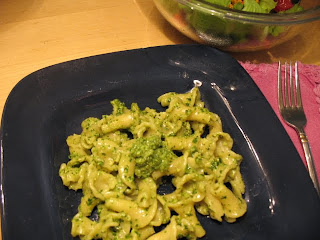
This week, I was lucky enough to have some pesto that I had just made (from the remnants of the basil jungle that I rescued from the frost and have been keeping alive in a spare bedroom), cooked white beans that I had frozen, and some homemade whole wheat wide noodles (made with this recipe) that I was terrified I would forget about until I found them desiccated and crumbled in a lonely corner of the freezer six months from now. Just the pasta with pesto would have been great for me, but I decided to plump it up with the beans. I flavored the beans with garlic and olive oil, plus some homemade vegetable broth, waiting in the wings for its supporting role. (Okay, so it was waiting in the refrigerator to be eaten.)

As I was cooking, I decided to snap a few photographs and pay a bit of attention to what I was doing, “Just in case it’s good.” I had a feeling that it was going to be pretty tasty, but if it wasn’t all that interesting, I could simply delete the photos and get on with my life. As it turns out, this was pretty good, and a darn good solution to the quick week-night meal mystery. A few kalamata olives and a sprinkling of Parmiggiano-Reggiano, and suddenly, it’s sophisticated. The whole thing took me about 20 minutes to make, maybe even less, so if you’re going to have garlic bread or a salad on the side, you better hustle to get them done at the same time.

The measurements and methods in the recipe below are approximations, since I didn’t start out to develop a recipe. You could certainly use canned beans, store-bought pesto and boxed pasta, or use whatever broth you have on hand for the liquid, or even dry white wine, water, or pasta cooking water. I say keep it simple and easy, but keep track of what you did….you know, in case it’s good.


Pasta with White Beans and Pesto

2 tablespoons olive oil
2 cloves garlic, thinly sliced
1 ½ cups cooked or canned white beans (about 1 16-ounce can), rinsed and drained
¾ cup vegetable broth
pinch of salt (to taste, depending on how salty the broth and beans are)
½ cup pesto
¼ cup kalamata olives, pitted and finely chopped
½ pound wide whole wheat pasta, or whatever pasta you like, cooked
Parmiggiano-Reggiano cheese

1. Heat the oil in a large skillet over medium heat. Add the garlic slices and cook, stirring often until the garlic is just beginning to brown.

2. Add the beans and broth, plus a pinch of salt if desired. Cook 5-8 minutes until the liquid has reduced by about half and has thickened. Add the pesto and olives and stir well.

3. Add the cooked pasta and toss well to coat. Cook long enough to heat everything through. If the sauce is too thick, thin it out with more broth or with the pasta cooking water. Sprinkle each serving with grated Parmiggiano-Reggiano if desired.

Makes about 4 servings.


Wednesday, September 16, 2009

Basil Jungle

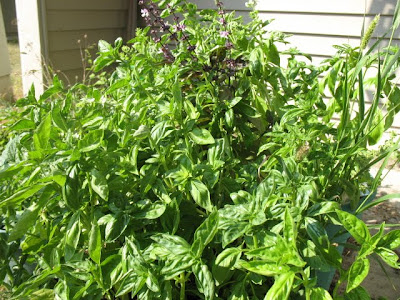
It’s that time of year. Peppers and tomatoes are mounded up in markets. There are a few more zucchini and summer squash plants that just won’t give up their ghosts, but continue to give just a little more fruit (a persistent vegetative state, perhaps?). Acorn, butternut and spaghetti squash are peeking in the doors, and apples have arrived. And my back porch resembles a jungle.

Last year, my aunt, upon gazing at my patio garden, asked if I thought I had enough basil. I’m always a little worried that there won’t be enough for a year’s supply of frozen pesto, so it took me a few moments to realize she was teasing me. And, yes, I had enough basil. I had more than enough basil. I still have pesto in the freezer from last year’s harvest. …And I did it all over again this year.

I don’t buy fresh basil in the “off season.” It’s pretty expensive, and probably came from far away. To me, basil is summer food and I try to get as much out of the season as I can. Dishes like Pasta with Cherry Tomatoes, Olives and Basil just have to wait for basil season. When its growing on the porch, I put fresh basil (as well as oregano, rosemary and thyme) in pizza and pasta sauces (like this simple one) where I would usually use it dried the rest of the year.

A die hard basil farmer like myself, however, would be lost (in the basil jungle) without pesto. It is the only recipe I know that uses enough basil to put a dent in my over-exuberant crop. There’s an added bonus to making pesto, too. It can easily be packaged and frozen, extending the season of pure basil satisfaction for many months …or until you’re really tired of pesto.

I wasn’t going to post a pesto recipe, since there are a zillion of them that you can find anywhere from your Italian grandmother’s recipe box (okay, so she probably doesn’t refer to a recipe, but you get the point) to the latest internet recipe sites. Besides, I rarely measure anything when making pesto, and really just cram a bunch of basil into the food processor with some parsley (I like the balance in flavor between the two herbs), Parmigiano-Reggiano cheese, walnuts (you could use pine nuts, which are more traditional, or almonds), garlic, salt and olive oil, and process it into submission. I decided to make this post anyway, since The Messy Apron is really a recipe and cooking journal, and this is what I’m doing this week. I’ve tried to approximate the amounts I used in my most recent batch of the green stuff in the recipe below.

Really, the pesto technique can be used with many different herbs and other green leaves as well as other kinds of nuts. I’ve seen recipes (and tried many of them) with arugula, spinach, cilantro and mint (one of my favorites), and sage, as well as with other nuts, such as macadamias and pistachios. I suppose the possibilities depend mostly on your personal taste, and what you planted too much of this year.

Now, if you’ll excuse me, I’ve got to take my machete back out to harvest the jungle and make some more pesto!


Basic Basil Pesto
This recipe makes a relatively thick pesto. If you like it thinner, simply add more olive oil.

3 cups basil leaves
1 cup parsley leaves
½ cup grated Parmesan cheese
½ cup walnuts, toasted
4 cloves garlic
2 teaspoons coarse salt
¼ cup olive oil, preferably extra-virgin

1. Place basil, parsley, Parmesan cheese, walnuts, garlic and salt in a food processor. Process until everything is well ground into a coarse paste.


2. With the processor running, slowly add the olive oil and process until completely smooth. Add more olive oil if the pesto is too thick.


To serve, toss pesto with hot pasta. Thin with a little pasta cooking water if desired. You can also add pesto to soups, spread it on garlic bread or pizza, or add it to sauces.

The pesto will turn a very dark green, almost brown color after storing. This is natural and still tastes good. Pouring a thin layer of olive oil over the stored pesto can help keep it bright green.

To freeze pesto, portion it out into plastic bags or freezable containers. Seal them into a freezer bag and freeze for a few months (or probably longer). You can also freeze small portions in ice cube trays.