Wednesday, March 2, 2016

Honey Wheat Pancakes


Well, February is gone, and I know neither where nor how. I did try some new recipes, but somehow didn’t get around to telling you about them. I do this too much, I know, but as I flip a new calendar page, I try to start fresh, try not look back (except to repeat a good meal, dish, snack or dessert, of course). Flip. Flip. Flip.


Just like pancakes. Delicious, honey-sweetened, whole-grain enhanced buttermilk pancakes. I’ve made these on a couple of non-working weekends, and they’ve made us very happy.

Lately, when I try a variation on pancakes, I start with a very simple buttermilk pancake recipe that I have memorized. That was the case here as well. All I did was sub in whole wheat pastry flour for some of the all-purpose, honey for the sugar, butter for the oil. I tried these with both whole wheat pastry flour and regular whole wheat flour and found that, while both were very good, the texture of pancakes with the regular whole wheat flour was a little more coarse. I found that I favored the softer pastry flour pancakes just a bit.


That difference is small, however, so I’ll probably flip back and for the between them as well as flip back to a white flour pancake or this butter pecan version. Just like I flip that calendar. Except, of course, the flip of the pancake is temporary as I intend to enjoy both sides.


Honey Wheat Pancakes

If you do not have buttermilk on hand, you could substitute with ¾ cup plain or vanilla yogurt and ¼ cup milk.

½ cup whole wheat pastry flour or regular whole wheat flour
½ cup all-purpose flour
1 teaspoon baking powder
¼ teaspoon baking soda
¼ teaspoon salt
2 tablespoons unsalted butter
1 egg
2 tablespoons honey
1 cup buttermilk

1. Preheat an electric frying pan or electric griddle to 350 F, or heat a large skillet on the stove over medium heat. Preheat the oven to 200 F for holding finished pancakes.

2. In a medium-size bowl, combine the whole wheat pastry flour, all-purpose flour, baking powder, baking soda, and salt. Whisk together to combine well. Set aside.

3. Meanwhile, melt the butter. In another medium-size bowl, lightly beat the egg. Gradually pour in the melted butter and whisk to combine well. Whisk in the honey. Whisk in the buttermilk.

4. Pour the egg mixture into the flour mixture and stir just until all the dry ingredients are moistened.

5. Spray the heated griddle or skillet with nonstick cooking spray. Pour a scant ¼ cup of the batter onto the pan for each pancake. Cook until the bottom is browned and bubbles begin to form on the top. Flip the pancakes over and cook on the other side until browned. Place the cooked pancakes in an oven-safe dish and hold in the preheated oven while cooking the rest of the batter. Serve with butter and maple syrup or honey.

Makes about 8 pancakes.


Tuesday, February 16, 2016

Cinnamon Rolls


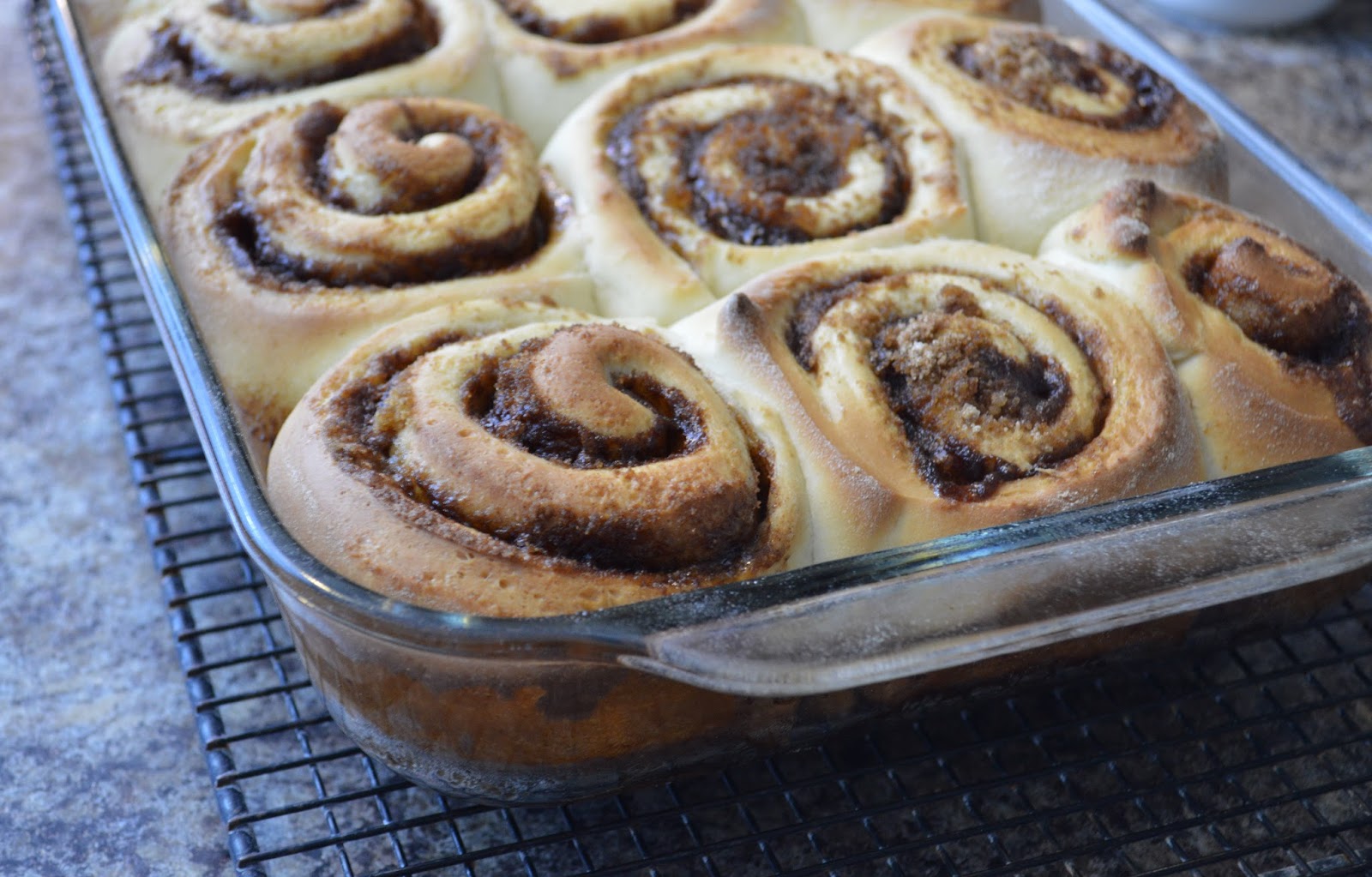
Once again, I’ve found myself away from these pages for longer than I planned. I hope these rich, decadent, and utterly delicious cinnamon rolls will make up for that at least a little bit.


I tried this recipe ages ago. It was originally written to take advantage of the convenience of a bread machine to make the dough. I did use my bread machine to make these rolls more than once, but I wore out my bread machine (making this pizza crust hundreds of times) so long ago, I can’t even remember when it was. 

 
This time, I used my Kitchen Aid stand mixer to make my cinnamon roll dough, which I find to be nearly as convenient as a bread machine, while offering a little more control over the recipe as I go. Of course, however you want to make your dough is just fine, as long as you respect the need for it to be rich with eggs, milk, butter, and sugar.


This lovely dough gets spread with butter and loaded with a generous mixture of brown sugar and cinnamon. A crazy amount of cinnamon. As if all this rich and wonderful goodness isn’t enough, a cream cheese frosting gets slathered right on the warm rolls where it melts a bit down into the cinnamon-sugar stuffed crevasses. They’re absolutely delicious while still fresh and warm, but nothing will make me turn my nose up at rolls that are even a few days old.


This pan of cinnamon rolls got me all excited about baking again. They are perfectly decadent and comforting, great for breakfast, an afternoon snack, or even dessert. They are also a great example of the reward one can get from a bit of labor in the kitchen. I wish I could tackle projects like this more often, and such a good one strengthens my resolve to make more time. Of course, if I manage to develop that much will power, I’ll have to use it to keep from eating all the cinnamon rolls!


Cinnamon Rolls with Cream Cheese Frosting
Adapted from AllRecipes.com

For the dough:
1 cup milk
1/3 cup unsalted butter
½ cup sugar, divided
2 ¼ teaspoons active dry yeast (1 envelope)
2 eggs, lightly beaten
4 ½ cups bread flour, divided
1 teaspoon salt

For the filling:
1 cup packed brown sugar
2 ½ teaspoon cinnamon
1/3 cup unsalted butter, softened

For the icing:
3 ounces cream cheese, softened
¼ cup unsalted butter, softened
1 ½ cup powdered sugar
½ teaspoon vanilla extract
1/8 teaspoon salt


1. To make the dough: pour the milk and the 1/3 cup butter in a small saucepan. Heat until the milk is at about 110 F and the butter is melted. (If the milk gets too hot, allow to cool to 110 F before proceeding).

2. Pour the milk mixture into the bowl of a stand mixer. Stir in 1 tablespoon sugar. Stir in the yeast. Let stand about 5 minutes or until the yeast is foamy.

3. Stir in the remaining sugar and eggs. Add about 2 cups flour and beat with the paddle attachment to make a wet batter. Cover with a towel and let stand 15 minutes.

4. Fit the mixer with the dough hook. Sprinkle the salt over the batter, which should appear risen and puffy. Knead in as much of the remaining flour as you can to make a slightly wet and sticky, but smooth dough. Knead for a total of about 10 minutes.

5. Spray a large bowl with nonstick cooking spray. Shape the kneaded dough into a smooth ball. Place the dough in the bowl. Spray the top of the dough with cooking spray. Place a sheet of plastic wrap on top of the dough. Cover with a towel and let stand for 1 hour or until doubled in size.

6. While the dough is rising, make the filling. In medium-size bowl, combine the brown sugar and cinnamon. Stir together until well-combined. Set aside.

7. Spray a 13 x 9-inch baking pan with nonstick cooking spray. Set aside. Deflate the risen dough and shape into a new ball. Cover and let rest for about 5 minutes.

8. On a well-floured surface, roll the dough out into a 15 x 20-inch rectangle. If the dough springs back rather than rolling out easily, cover and let rest a few minutes until it is easier to work with. Spread the 1/3 cup soft butter evenly over the dough rectangle. Sprinkle the filling mixture evenly over the butter.

9. Beginning with a long side of the dough rectangle, roll up the dough. Cut into 12 rolls. Place the rolls, cut sides up in the prepared baking pan, leaving room between each roll for the dough to rise. Cover with a towel and let stand about 30-40 minutes or until the rolls have roughly doubled in size and filled the pan.

10. Preheat the oven to 400 F. Bake the rolls about 20 minutes or until golden brown. Remove from the oven.

11. Make the icing: Combine the cream cheese, butter and vanilla in a medium-size bowl. Beat with an electric mixer until smooth. Beat in the powdered sugar and salt until smooth. Spread the icing over the warm rolls and let stand until cool enough to eat.

Makes 12 rolls.


One year ago: Cherry Almond Scones


Tuesday, February 2, 2016

Beer and Onion Rye Bread


It must have been at least ten years ago that I got excited enough about trying new bread recipes that I set up a nice journal to record my adventures. It turned out to be a short-lived project. I wanted to move on to new thing after new thing and when too many recipes needed tweaking or improved skills, my enthusiasm kind of fizzled.

I didn’t stop making bread, though. I kept making loaves and doughs that worked well (like this sandwich bread and this baguette and this pizza crust), improving my skills and improving recipes. Now, when I try a new bread recipe, I shift it a little bit to match the way I know bread works for me. In other words, I take the new flavors and make them into bread my way.


I did this recently with a Beer and Onion Rye Bread. I used my usual method of making a sort of mini starter (at least that’s how I think of it) to let the yeast ferment a bit and let some good flavor develop. I find that this step somehow makes bread rising more predictable. I use a Kitchen Aid stand mixer to do my kneading, and I only add as much flour as I need to make a stretchy, still fairly tacky dough.

But theory is nothing without flavor, and this bread has lots of good stuff in that department. I used a brown ale in the bread, which gave it a pleasant, dark bitterness, which was complemented and nicely balanced by the sourness of a bit of vinegar and sour cream. The classic additions of onion and caraway with rye flour add even more great flavor. That rye flour (I used some good, stone-ground flour) makes the bread soft, but it’s still hearty and rich. Really delicious stuff!


This loaf is a bit larger than my usual sandwich loaves. I shaped it into an oval loaf, but it’s still big enough around to make slices for sandwiches. I recommend roast beef, ham, or a really awesome grilled cheese. It’s just fine all on its own, too.


Beer and Onion Rye Bread
Adapted from Cooking Light magazine

1 tablespoon olive oil
½ cup finely chopped onion
¾ cup brown beer or ale
1 teaspoon sugar
4 ½ teaspoons active dry yeast (2 envelopes)
½ cup sour cream
1 tablespoon white vinegar
1 tablespoon caraway seeds
1 large egg, lightly beaten
1 cup stone ground rye flour
2 ¾ cup bread flour, divided
1 ½ teaspoons salt

1. Heat the olive oil in a small skillet over medium low heat. Add the onion and cook, stirring occasionally, until softened and just beginning to brown, about 8-10 minutes. Remove from the heat.

2. Warm the beer to 100 F to 110 F. Pour the warm beer into the bowl of a stand mixer. Stir in the sugar and yeast. Let stand about 5 minutes or until the yeast is bubbly.

3. Stir in the sour cream, white vinegar, caraway seeds, and egg. Add the rye flour and 1 cup bread flour. Stir together using the paddle attachment until a thin, batter-like dough forms. Cover and let stand about 30 minutes.

4. After 30 minutes, the batter should have risen lightly and have a puffy, slightly foamy appearance. Add the onions, salt and about half the remaining bread flour.

5. Fit the mixer with the dough hook and knead the dough on medium-low speed for about 10 minutes, kneading in as much of the remaining flour as the dough will take while still remaining soft and slightly sticky.

6. Remove the dough from the mixing bowl and shape into a smooth ball. Spray a large bowl with cooking spray and place the dough ball inside. Spay the dough ball with cooking spray and place a sheet of plastic wrap directly on top. Cover the bowl with a towel and let stand about 1 – 1 ½ hours or until doubled in size.

7. Gently deflate the dough and shape it into an oval 8-10 inches long. Place the dough on a baking sheet lined with parchment paper or a silicone baking mat. Cover with a towel and let stand about 30 minutes or until roughly doubled in size.

8. Meanwhile, preheat the oven to 400 F. When the dough is ready, take a very sharp knife and cut several slashes in the top of the loaf. Bake at 400 F for 30 minutes or until golden brown and the bread tests done. (The bread is done when it sounds hollow when tapped on the bottom or when an instant read thermometer reads about 200 F.)

Makes 1 large loaf.